
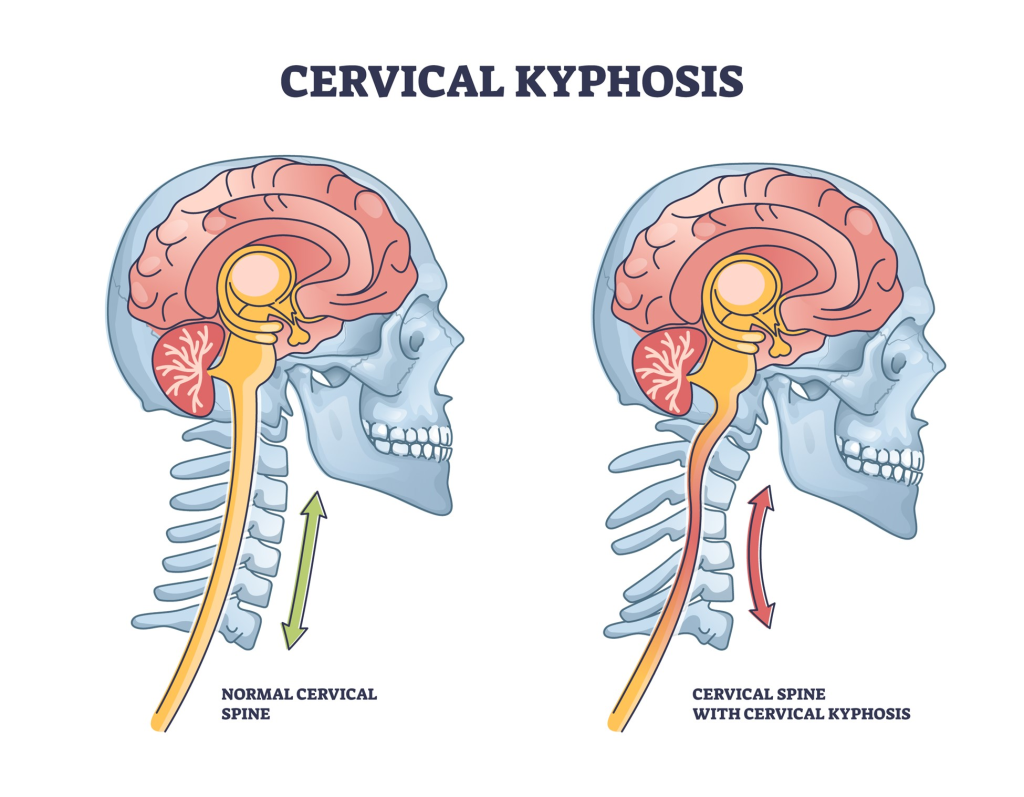
What is military neck?
A healthy neck has a ‘C’ curve / lordosis when you see it from the side and the curve rolls forward from the bottom of the cervical spine and curves back again halfway up to the head. the healthy neck has approximately 30 to 40 degrees of the curve. Taking its name from the idea that military people stand perfectly straight and tall, “military neck pain” is a slang term for the loss of the “C” curve in the neck. The military neck is also known as cervical kyphosis or straight neck.
What symptoms does military neck cause?
The following symptoms can accompany military neck:
- stiffness
- decreased range of motion
- headaches
- pain in the neck and the extremities (fingers and toes)
- coordination problems
- muscle weakness
- spine deformity
- paralysis
- bladder and bowel control issues
Not everyone with military neck will experience the same symptoms. Paralysis, bladder control issues, and bowel control issues are only present in extreme cases, especially when the condition is left untreated.
What causes military neck?
The most common cause of military neck is poor posture, either when awake or when sleeping. Poor posture can result from staring at the computer, occupational conditions, or repetitive movements. However, the condition can develop from other factors as well, such as:
Degenerative disc disease
As you age, your intervertebral discs begin to degenerate. This causes the discs in your spine to grow thin and collapse.
This change to the spine can alter your neck’s natural curvature and cause an imbalance due to the weight of your head. Degenerative disc disease usually increases in severity as you get older.
Iatrogenic disorder
Military neck can be iatrogenic, meaning it’s an unintended result of a medical procedure. The most common of these procedures is a laminectomy, which is performed to relieve pressure in the spine.
Removing the lamina creates more space for nerves, but it can also cause the facet joints between the vertebrae to be unstable. This complication is seen most often in children who undergo the procedure, as opposed to adults. The iatrogenic disorder can also arise from an unsuccessful cervical spine fusion, in which the fusion is too short.
Congenital disorder
A congenital disorder is one that occurs from birth, otherwise known as a birth defect. Those whose cervical kyphosis is congenital usually have complications in other parts of the body as well, such as urinary or kidney defects.
When military neck is a result of a congenital disorder, such as the spine not forming completely, the spine grows abnormally and the vertebrae create a triangle shape as they grow. This places an unnatural curve on the neck and stacked vertebrae.
Trauma
Trauma can also cause military neck. Different types of injuries can cause trauma, including a car accident, a fall, or a sports injury. If the ligaments fracture or tear, the spine can curve forward and the spinal cavity might narrow.
The compression might cause the body of the vertebrae to heal in the shape of a wedge, creating an imbalance. In serious cases, you might experience neurological problems from the narrowing of the spinal canal, called spinal stenosis. Compressed pressure can cause numbness, pain, and muscle weakness.
How Can Elite Performance Therapy Help To Treat Your Military Neck Syndrome?
Fortunately, many of the symptoms of military neck syndrome are treatable.
Physiotherapy and Manual Therapy
Physiotherapy and Sports Massage Therapy can be an effective treatment approach for military neck or straight neck syndrome. Our therapists can provide targeted exercises, manual therapy techniques, if appropriate western acupuncture and education to help improve posture, restore neck curvature, strengthen muscles, and reduce pain and stiffness. Here are some common approaches used at Elite Performance Therapy for treating military neck:
Stretching Exercises: Gentle stretching exercises for the neck, shoulders, and upper back can help improve flexibility, relieve muscle tension, and restore the natural curvature of the cervical spine. These exercises may include chin tucks, neck stretches, and shoulder stretches.
Strengthening Exercises: Targeted exercises aim to strengthen the muscles that support the neck and upper back. This helps improve posture, stability, and muscle balance. Examples of exercises may include neck isometrics, scapular stabilization exercises, and exercises for the deep neck flexors.
Manual Therapy: Techniques such as manual neck mobilization, soft tissue mobilization, and myofascial release can be used by our therapists to address stiffness, muscle imbalances, and joint restrictions in the cervical spine. These hands-on techniques can help improve the range of motion and reduce pain.
Have Yourself Checked Today!
If you are experiencing symptoms or suspect that you may have military neck, please do call us or make an appointment with one of our therapists at Elite Performance Therapy using the form below.